Friday, May 1, 2009

Local business helping Rector man fulfill dream

Thursday, April 30, 2009
By RYAN ROGERS

A Rector man is one step closer to realizing his dream thanks to the long reaching arms of a local business.

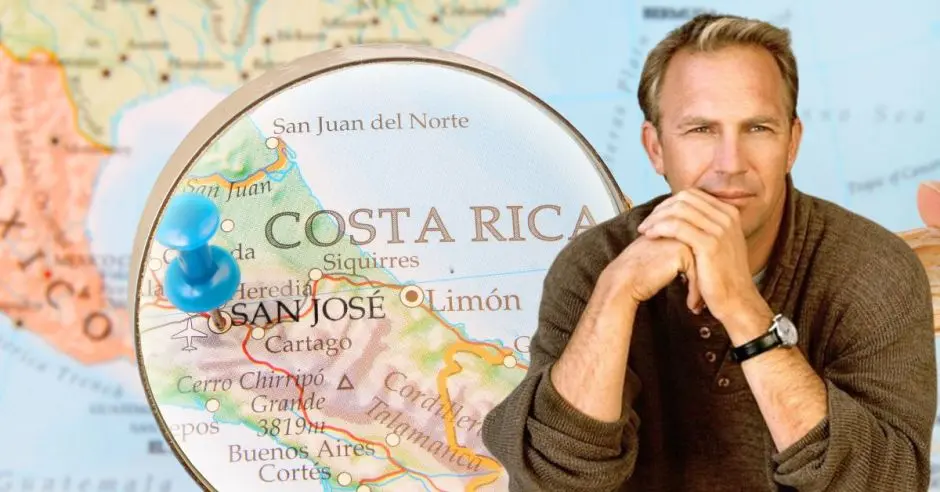
Dean Ferguson hopes to move to Costa Rica. The Rector native recently visited the Central American country to view properties he could potentially purchase. Assisting Ferguson in this endeavor is local United Country Real Estate partner Rector Realty. Through their association in United Country, Rector Realty is connected to one of the world's largest collection of realtors. This network is so large in fact, Rector Realty was able to put Ferguson in contact with a partnering realtor in Costa Rica.

"I came to Rector Realty hoping they would be able to point me in the right direction," Ferguson said. "They certainly did that and so much more."

Ferguson was able to meet with Costa Rican realtor Arturo Guzman via a video conference set up by Rector Realty owner Jasa Haney-Hollis. Haney-Hollis and Guzman helped make arrangements for Ferguson's trip to Costa Rica. Not only did they arrange much of his travel, the realtors also were responsible for booking his hotel reservations. A telling sign in the quality of Ferguson's accommodations during his stay from March 24 to April 2 is the fact the same hotel he stayed in also hosted vice-president Joe Biden during his recent visit to Costa Rica.

"It was like a movie," Ferguson said. "They had a car waiting for me at the airport to take me to the hotel. They were with me every step of the way. United Country was very professional. I can't say enough about how well I was treated."

Ferguson was shown a number of properties. First, he and Guzman visited the various homes for sale. Then, to provide a different view, Ferguson was flown over the areas in a helicopter.

"From the air, I was really able to get a better feel of how the properties were laid out," Ferguson said. "It was also an enjoyable feeling, flying over so much of the country. It was quite beautiful."

Ferguson made a point of enjoying the native beauty of Costa Rica. Located just 12 degrees above the equator, Costa Rica enjoys a nice, tropical climate. It's also home to natural splendor, featuring rain forests and beaches.

"It's such a beautiful place," Ferguson said.

What really attracted Ferguson to Costa Rica, however, was the weather.

"Basically, I'm trading four seasons for one," he said. "The sun comes up every day at 6 a.m. and goes down at 6 p.m. They don't have fall or winter there. They do have a rainy season, but it's all sunshine for seven months out of the year."

Ferguson says he plans to hold dual citizenship in both Costa Rica and the United States. He also plans on returning to visit Rector from time to time.

Ferguson is a 1959 graduate of Rector High School. After school, he served in the United States Navy. When his service ended, he moved to St. Louis, where he worked for Anheuser-Busch for 34 years as a mechanical engineer and consultant. As part of his job, he helped the company set up breweries in Mexico, Argentina, France, Germany and Belgium, among other locales. These trips helped further Ferguson's love of travel.

Ferguson says he plans to return to Costa Rica in July. He is heavily considering buying property near the northwestern part of the country, along the Pacific Gold Coast.

"I really like that region," he said. "It's a rural area, but it's also developed. They have a lot of their infrastructure in place."

When he decides on a property, Ferguson will be selling his Rector home through Rector Realty.

"I wanted to work with just one company if I could," Ferguson said. "With United Country, I've been able to do that."

Haney-Hollis said one of the best features of being a United Country partner is the number of listings in other areas.

"We can relocate people," Haney-Hollis said. "We can refer people to agents outside of the state, or even outside of the country."

Costa Rica Any Way You Want It

     
By ETHAN TODRAS-WHITEHILL
Published: March 22, 2009

THINK of Costa Rica as a Rorschach test for travelers. Outlined on a map, it has no recognizable shape. But enclosed in tropical lines of latitude, with appropriate squiggles for mountains, coasts and interior borders, it's an inkblot for projecting travel fantasies. Beach lovers trace the craggy coasts and see hammocks swinging in the sunset breeze. The eyes of the nature-minded glaze when they note all the national parks. And adrenaline fanatics fixate on the mountains and rivers.

Costa Rica is tiny, smaller than West Virginia, but huge in versatility, with coasts on two oceans, coral-lined beaches and active volcanoes, luxury resorts and surf camps, roaring streams and rich biodiversity. Planning a trip for myself and my father last November, I set myself a challenge. How many Costa Ricas could we sample in just eight days? I settled on three: the rich primordial forest, the adventurer's playground and the beachfront paradise. After subtracting travel time within the country, we would have a day and a half to two and a half days at our chosen location for each one, time enough for a taste, at least, of the country's riches.

Eco-Tourism:
Monteverde

I stared into the dark jungle, hoping to see something staring back. The blackness was not complete; overhead the outlines of banana trees let in a little starlight, and, of course, for walking through the forest at night we all carried flashlights. Like most tourists, I had come to the Monteverde Cloud Forest Reserve in hopes of seeing big mammals like jaguars, ocelots or tapirs. I didn't. Almost no one does. But 10 minutes with a guide on a three-hour walk our first night in the reserve proved that the plants and insects can be just as captivating — and as deadly.

The guide, who introduced himself only as Christian, combined the laid-back attitude of a surfer with the taxonomic command of an evolutionary biologist. He showed us an alligator tree, whose broad, conical spikes were developed to repel the elephant-size sloths that roamed the Americas as recently as 10,000 years ago. He grew animated as he called us over to look at a strangler fig, which begins life as an innocent epiphyte delivered into an unsuspecting tree's branches by a bird, then grows vines up to the sunlight and down to the ground, eventually enveloping the host tree and strangling it.

In a hole in the dead tree, behind the sinewy crawl of fig roots, Christian shined his light on an orange-kneed tarantula perched at the entrance, waiting for its prey. Why didn't it hunt out in the open, someone asked? Christian explained that tarantula wasps live in the area, waiting to paralyze a tarantula with their sting, lay eggs inside it and wait as the wasp larvae slowly consume the still-living spider from within. Let's see an ocelot try that.

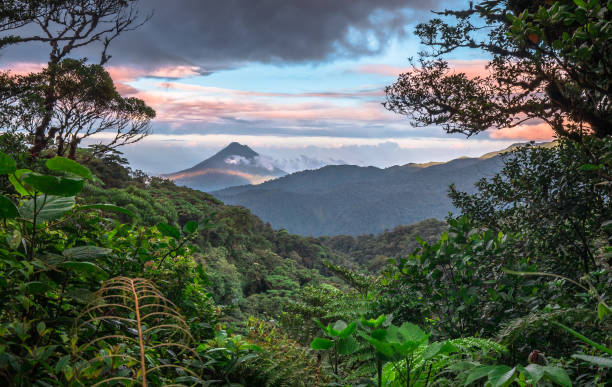
Situated in the Tilarán Mountains northwest of San José, Costa Rica's capital, Monteverde is a Disneyland for eco-tourists. With its verdant cloud forest and 1,000 endemic plant species, Monteverde offers the pilgrimage to nature that many seek from the tropics. Since tourists are unlikely to spot all the wildlife they might wish to, private guides have always operated in the reserve, and in recent years, privately run zoo-like exhibitions have popped up: a bat jungle, a frog pond, a butterfly garden, a serpentarium. Add an organic cheese factory, a fair-trade coffee plantation and a half-dozen high-end hotels that vie to outdo one another with their recycling programs and renewable energy projects, and Monteverde has all senses of the word “green” covered.

Twenty-seven percent of Costa Rica's land area is devoted to national parks and reserves, one of the highest percentages for any country. Monteverde, which is the primary place marketed to eco-tourists, is between two reserves — Monteverde and Santa Elena — deep in the Costa Rican highlands. It is well developed, with hotels, several restaurants, shops and art galleries. It even has an asphalt road connecting the two reserves and villages between, which is curious since the four-hour drive through farms and orchards to get to the area from San José is rocky and rutted — a result, locals say, of an earlier desire to keep down the number of visitors (now, most would prefer that the government pave the road). It is an oasis of infrastructure amid the rural and the wild.

We stayed at the Hotel Belmar, off the main drag between the town and the Monteverde reserve. Most people make reservations for the various activities through the hotels because guides are recommended. For those with keen wilderness eyes or their own binoculars or both, it is possible to walk through the reserves unguided.

The next day, our only full day in the area, brought sunlight and a decidedly more benign face from nature. Inside the Monteverde reserve, weaving among clusters of people with their own guides and tripod-attached spotting scopes, our tour group passed huge, leafy elephant ear plants and miniature orchids no more than a millimeter or two across. Monkeys howled and birds twittered overhead, and we spotted a sloth sleeping out the day, matted gray fur tucked into a cradle of branches 20 feet up.

The real joy-bringers were the hummingbirds, sporadic companions within the reserve but constant ones just outside it, where sugar-water feeders were set up. The names by themselves were enough to force smiles: green-crowned brilliants, purple-throated mountain-gems, coppery-headed emeralds! The most dramatic were the violet sabrewings with their white tail feathers and iridescent bodies, purple like a royal robe. Around the feeders, the hummingbirds buzzed by our ears like a squadron of propeller planes. No wonder: with only nectar for food and heart rates of as high as around 1,200 beats a minute, these birds live in a nonstop sugar rush.

Looking for animals in a nature preserve is a bit like playing blackjack in a casino: you know the odds are against you, but at least it feels like skill when you win. Not quite sated with birds and bugs and plants, I decided to stack the deck and take a taxi to El Ranario, a private frog pond. But the frogs still required some effort to spot, blending in against the leaves and soil of their somewhat dilapidated cages. The blue jeans frog (red with blue legs) was no larger than a thumbnail, while the bodies of the glass frogs were completely translucent. But by far the best frog to find behind glass was the “chicken-eating frog” — a bull frog the size of a small cat that is said to eat chicks when given the opportunity. Confronted with that monster frog in the jungle at night, armed with only a flashlight, I may well have turned and run.

Adventure Tourism:
Turrialba

“Will there be cliffs we can jump off of?” Jana Hoffman asked our guide, her native Minnesota accent creeping in. We were in a lull on an 18-mile white-water run down the Pacuare River near the town of Turrialba. Ms. Hoffman and her husband, Dan, on their honeymoon, were on the starboard side of the raft. My father and I held the port, paddles at the ready. Rudolfo Camacho (called Chalo), the guide, a burly, mustached man in his 40s, grinned and nodded to Ms. Hoffman.

But we had rapids to navigate first. The one coming up was Class IV: major obstructions, big, unavoidable waves, distinct risk of flipping — in short, fun.

“Forward hard!” Chalo cried. We dug into the foaming water, Chalo in the rear steering us between two huge boulders. The current picked up as the river drove us through the funnel, waves far larger than our dinky craft dragging us up and down, smashing into us sideways. The funnel wound around the boulders, and at the end of it I saw the hole: a deep depression in the river that sucks water down and shoots it back up, creating a permanent huge wave. This one was so tall it blocked our view of the river beyond. We went down hard and then up, up, up, until the raft was almost completely vertical.

But this was routine for Chalo; he needed a little more excitement. Just as we crested the wave he jumped headfirst into the froth. “Whoo!” he cried, shaking his face dry as he surfaced. He climbed back into the raft as the river calmed.

Among the adreno-scenti, Costa Rica is known as one of the best and closest foreign adventure tourism destinations to the United States. The surfing, particularly on the Nicoya Peninsula, is known to be first class. The volcano hiking and Caribbean scuba diving are not far behind. With but two days to sample Costa Rica's blood-pumping options, I went for the main course: rafting near Turrialba on some of the most scenic whitewater an amateur can access — and some of the most challenging.

For a town so well regarded for its rafting, Turrialba itself has relatively few tourists. That is because it is less than two hours east of San José, and most rafting groups begin and end their day in the city. Turrialba's mostly bare-bones hotels, hostels and rest houses combined number in the single digits, many fewer than the number of rafting companies that operate in the area. We were staying at the Hotel Interamericano, a colorful but spartan hotel run by an American woman.

Booking a rafting trip in Turrialba is a local affair, in which company owners (some of them expatriate Americans) will come to your hotel common room to discuss the trip in person. Entertainment in the town itself is nonexistent. In the evening, we strolled up to the main square to watch teenage couples canoodling on blue stone benches and old men arguing in pairs as the sounds of evening Mass echoed from the nearby church.

The Pacuare started off difficult enough, but Chalo, who had captained the Costa Rica national rafting team from 1994 to 1998, was almost too good, lulling us into a state of absolute trust with his pinpoint control. Even the cliff jump Ms. Hoffman had requested — 20 feet off a moss-covered boulder into a calm pool — had my heart racing only for a moment.

After a second jump, we drifted in our life vests down a steep vegetation-lined gorge under a rickety wooden bridge as drizzle dimpled the calm water. The narrow patch of sky visible through the moss-covered leaves and branches was gray, but upriver the sun shone bright, misty rays illuminating our passage like some heavenly corridor — wonderful for the aesthetically oriented centers of the brain, but doing nothing for the adrenal glands.

The next day changed all that. We tackled mighty Reventazón, a brown powerhouse of a river. “Today a little more agresivo, yes?” Chalo asked. He explained that the day before, in deference to my father, who is 63, he had been running the “chicken line,” the safest path through the rapids. On this day, my father was staying behind.

The Reventazón has 20 Class IVs back-to-back. Still flush with the previous day's confidence, we told Chalo to go for it. I was scared from the moment we launched the raft in the middle of a rapid, pulling hard from the start. We took the first waterfall sitting on the floor for ballast but tried to power through others, despite occasionally reaching the paddle over the side and finding only air. Even the Hoffmans, who own and use their own raft in their hometown of Steamboat Springs, Colo., looked nervous.

And then we flipped. It was at a hole like the one we'd seen the day before, but instead of going straight up and over, the raft twisted, upended as easily and callously as a child's toy in a bathtub. Chalo guided us over to one of the cliffs on the bank as we clung to the raft, the tanklike press of the water trying to rip us away. Chalo had the raft upright again in a matter of moments and in less than 30 seconds had us all back in our spots, dumbstruck. He caught the boat on a rock before the next rapid to let us find our breath. I looked into Dan's eyes and then Jana's, as the river roared by the unmoving raft, and they both nodded to me. I informed Chalo of our decision: the chicken line, please.

Luxury Tourism:
Manuel Antonio

After Turrialba, we took an 18-seat propeller plane to the Pacific coast. It was time to sample what legions of visitors come to find in Costa Rica: sun, sand and sybaritic relaxation.

Some of the country's best beaches are preserved in Manuel Antonio, Costa Rica's smallest and most popular national park, with about 4,000 acres and 150,000 annual visitors. Twenty-five years ago the area nearby held no more than a few cheap cabanas. Now a luxury infrastructure has grown up. Compared with Mexican resort towns like Cancún or Cabo San Lucas, the area still doesn't feel overdeveloped. The airport that serves the park, at the town of Quepos, is served by two local airlines that land on an asphalt runway surrounded by jungle. Flying in feels as if you're heading to a sea of African oil palms, the favored crop of nearby plantations.

The half-hour drive down the coast from the airport to the park is a strip of tourist restaurants, spas and hotels, with a turnoff midway to the high bluff where all the luxury lodgings are. The Hotel Parador, where we stayed, sprawls over the tip of the bluff like a Mediterranean villa and falls toward the high end in the local scale of luxury. In high season, the room prices are $200 to $400.

We arrived on a Sunday to immediate disappointment. It was too late to get to the park that day, and we couldn't go the next day either: Manuel Antonio is closed on Mondays. The sky was dimming from gathering clouds and a retreating sun as we walked a muddy road to Espadilla Beach, a public beach.

The beach was at the end of a long cove, bounded on one end by a brackish moat formed by the skirmishes of a freshwater stream and the salty tide, and on the other by a long wooded promontory. A brown pelican dived from the steel blue sky into the sea but came up empty. The wind picked up, unheard over the crash of surf but felt in the goose-pimpling of flesh. It seemed idyllic enough.

But then my father and I sat down on a set of beach chairs, and although aside from some surfers we were the only people on the beach, a man scurried over after a couple of minutes and insisted we pay for the seats. It began to rain. The cries of souvenir sellers pierced the air as they covered up their wares, and the black tarp roof of an unappealing beachside restaurant flapped incessantly in the wind. Espadilla was nice, but with so many other coves dotting the shoreline, surely Costa Rica's famed beachfront could be better.

We lazed away the next morning in our hotel's infinity pool, counting the languages and accents of the other guests who floated by us. In the afternoon, we walked downhill through the jungle to Biesanz Beach, a tiny cove where igneous boulders the size of small dogs to small trucks break up the waterline. The water itself was a lovely turquoise, as if someone had mixed the blue of the sky and the green of the jungle, and the beach was quiet, with only two other visitors. But the water was still. We craved waves.

Back at the hotel, I went in for a massage at the spa. The aromas of lavender and mint guided me to my masseuse, under whose capable hands I let the day seep out of me to the music of chirping tree frogs in the dimming twilight. We had dinner at Kapi Kapi, a restaurant with both Costa Rican and Thai influences, where we had a brilliant macadamia-crusted mahi-mahi, sugar cane-skewered prawns and a slice of magnificently tart mandarin lime pie. I fell asleep as soon as we returned; relaxation, it turns out, can be difficult work.

The park itself is a relatively short stretch of trails on upraised concrete blocks under cotton-silk, almond and coconut palm trees. Stepping out of the steaming jungle on Tuesday, onto the breezy beaches, had a “Robinson Crusoe” feel — until we saw other people already sunbathing. Even the park's farthest beach, called Puerto Escondido, or the Hidden Port, filled up quickly when the tide receded, leaving the path accessible without a scramble over sharp rocks. In the end, I felt more like Goldilocks: this beach was too small, this one too rocky, and all were too crowded, with negligible waves.

Dispirited, we left the park and returned to Espadilla Beach, where we had been before, as the rain again began to fall. We stopped in the restaurant with the plastic tarp roof and had a plate of surprisingly delicious pork ribs, then sat on chairs again. The same man came to take our money, but recognizing us, he stayed and joked around with my father for a while.

As the rain intensified, the sky darkened and all but the most hard-core of surfers left for drier places, I took a second look at Espadilla Beach. Of all the beaches we had visited, it was the only one with any waves. Nestled between two knobby bluffs, the arc of its cove was smooth and sweet, and the little islands offshore broke up the horizon just so. How had I missed it?

It is amazing how the character of a beach can change when the dingy restaurant becomes a local gem, the pushy entrepreneur becomes a friend, and the rest of the tourists clear out. We waded into the surf, savoring every swell and break that buffeted our bodies, drifting in the gunmetal sea.

Monday, December 22, 2008

Type of residencies, requirements and benefits

TYPE OF RESIDENCY: PENSIONADO (Retired)

REQUIRES: Proof of US$600 per month income from permanent pension source or retirement fund
STAY: Must remain in the country at least 4 months per year.
FAMILY: Can claim spouse and dependants under 18 years of age.
WORK: Can work as an employee
BUSINESS: Can own a company and receive income.

TYPE OF RESIDENCY: RENTISTA (Renter)

REQUIRES: Proof of US$1,000 per month for at least five years, guaranteed by a banking institution, or a US$60,000 deposit in an approved Costa Rican bank. Double income for spouse
STAY: Must remain in the country at least 4 months per year.
FAMILY: Can claim spouse and dependants under 18 years of age.
WORK: Cannot work as an employee.
BUSINESS: Can own a company and receive income.

TYPE OF RESIDENCY: INVERSIONISTA (Investor)

REQUIRES: $200,000 in any business or a specified amount of investment in certain government approved sectors.
STAY: Must remain in the country at least 6 months per year.
FAMILY: Cannot claim spouse and dependants under 18 years of age. It must be a separate process.
WORK: Income allowed from the project.
BUSINESS: Can own a company and receive income.

TYPE OF RESIDENCY: REPRESENTANTE (Representative)


REQUIRES: The one that applies should be a director of a company with certain requirements, such as employing a minimum number of local workers as established by the labor law, with financial statements certified by a Public Accountant.
STAY: Must remain in the country at least 6 months per year.
FAMILY: Cannot claim spouse and dependants under 18 years of age. It must be a separate process.
WORK: Can earn an income from the company.
BUSINESS: Can own a company and receive income.

TYPE OF RESIDENCY: PERMANENTE (Permanent)

REQUIRES: There must be a first degree relative status with a Costa Rican Citizen (married to a citizen or by having a Costa Rican baby) or may apply after 3 years in another residency type.
STAY: Must visit the country (Costa Rica) at least once a year.
FAMILY: Cannot claim spouse and dependants under 18 years of age.
WORK: Can work
BUSINESS: Can own a company and receive income.
Taken from the Website of the Direccion General de Migracion y Extranjeria (Governmental Migration Department) Dic, 2008

Some Legal Considerations for Living or Investing in Costa Rica

Registration System. Costa Rica has a centralized registration system called National Registry (“Registro Nacional”) where corporations, vehicles, mortgages and real estate transactions are registered. The Costa Rican registration system is very advanced and the Registry records not only documents (like other Registries all along other countries), but it also registries rights inherent of those documents. A very timely and strict system records the transactions presented giving legal certainty to the legal acts.

Most properties in Costa Rica are registered in a computer system and each property has an identification number called: "Folio Real". For different reasons there are some properties that are not registered meaning they don´t have a Folio Real number and therefore cannot be tracked properly in the Registry.

Due Diligence. Before purchasing any property or even before seriously considering buying it is advisable to perform a detailed study before the Public Registry. Such study should include not only the folio real with it measurement, boundaries, ownership, location, survey plan, annotations, encumbrances and liens, but also a study of the transfer chain since the property was originally registered.

Pending registration (“Anotaciones”) may be due to filing of incomplete or erroneous documents, lack of payment of taxes, etc. A document filed on a property while an annotation appears will not be registered until the annotated document or documents are either registered or removed following a special procedure.

There are properties on sale that have actual ownership rights and another ones have only a right of possession or occupation rights. In the first case the property is registered, but in the second case the land hasn´t being registered and a study of ownership cannot be performed before the National Registry.

When you buy a business it is important to perform a more detailed study including: lease contracts, employment contracts, sales, income and property taxes paid to date, permits in place such as: Municipal permits, liquor licenses, Ministry of Health authorization, Insurance, Social Security, among others. Of course the advice of a lawyer and accountant are preferable in any case.

Property transfer require for buyer and seller to sign a deed before a Costa Rican Notary Public (whose concept is different than the one in many other countries such as the United States or Canada and is required to formalize all transactions dealing with real estate) and for such deed to be recorded at the Public Registry.

Although titled land can be purchased in Costa Rica in the name of an individual as well as in the name of a company, and foreign ownership is fully permitted, it is advisable to purchase property through a corporation. This structure allows having flexibility and more predictability on areas ranging from estate planning, tax management, and representation.

Concession Land. Like in many other countries the maritime zone (“Zona Marítimo T errestre”) land is owned by the Government and given in lease to third parties, this is known as concession. This concession grants the authority to a private party to use the land for a renewable period of time. Almost the 95% of maritime zones in Costa Rica are concessions and therefore have special requirements regarding the zoning, occupation and density, among others.

Cost of property transfer. In general, the cost involved in a real estate transaction are divided in 3 categories: a) Transfer Tax (1,5% of the purchase price); b) Transfer Stamps (1% of the purchase price) and c) Legal Fees (1,25% of the purchase price). So the cost are: 2,5% in tax and stamps plus a 1,25% legal fees. If you purchase shares of the owning entity (no transfer deed as explained bellow) the only charge for the transfer is the legal fees.

Title Insurance. Title Insurance works the same that in other latitudes such as Canada and United States and although it is not necessary is advisable. In Costa Rica some of the title companies are: Chicago Title, Land America, Stewart Title, among others, you can get this service trough your lawyer in Costa Rica.

Maps. Each property must have a registered map or survey (“Plano Catastrado”) to be locating the property in the field with exact measurement, actual boundaries, and description of buildings or structures. No property transfers can be made if the land does not have a registered map, and such map must be quoted in the transfer deed. If such map does not exist, it must be made by a specialized registered surveyor (“Topografo”), and then the transaction can be effectively achieved.

Buying Property trough acquiring the corporation (share transfer). Buying the shares of the company that owns the property instead of transferring it through the Register is a common practice. This way the seller transfers the shares of an existing company that owns the property to be purchased, instead of transferring it through the Public Registry to a third party. In this case a transfer deed is not necessary but other legal documentation such as: a purchase sale agreement of the shares, change the board of directors (so the buyer can take control of it), several entries to the legal books and endorsement of shares, among others must be performed.
Although the share transfer system may sound attractive at first sight, since it allows to save money in transfer taxes, we do not always recommend to take this path and advise to transfer property through the Registry under the standard procedure of a notarized deed. When you acquire the shares of a corporation in Costa Rica, as in most other countries, you do not only get the company’s assets (in this case, mainly, the property) but also its liabilities, and there is no mechanism to satisfactorily list them or rule out their existence. Such liabilities, if existent, would directly affect the property being acquired.

Property Taxes. Every property owner is obligated to pay its property taxes; otherwise they might be putting in great risk their investment. The Costa Rican Government recently passed a law that expedites all judicial collection procedures (including taxes) and might be subject to a foreclosure.

In Costa Rica, land taxes are collected by local governments corresponding to the county where the land is located, which are denominated “Municipalities” (“Municipalidades”), and these moneys are directly used by them.. These taxes are paid at a rate of 0.25% of the declared value of the property. This tax is due quarterly and a strict record of payment should be held by each owner. The payment of taxes do not require physical presence of the owner in the country, the payments can be made with the help of your lawyer.

We advice that prior to the purchase of the property the buyer makes sure these taxes are paid up to date, if not the new owner must have to cover them for the lack of payment of the previous owner. Furthermore if what you are buying is an apartment or a lot in condominium property you must check if the taxes are included in the monthly condo fees, since they are usually not included in such fees and the buyer must pay the property taxes directly to the Municipality.
Corporate Taxes. The Fiscal Year (“Período Fiscal”) in Costa Rica goes from the 1 of October to September 30 . Local s t t h corporations do not always need to file income tax statements at the end of each fiscal year (September 30), especially if there are only for holding purposes. A case by case study should be performed in order to determine this.

Nevertheless, whether a company declares and pays income tax or not, and applicable to all Costa Rican corporations, a special tax called “Timbre de Educación y Cultura” must be paid each year. This tax is relatively low (20 dollars a year). If payment is not made, penaltiesapply and the corporation will not be in good standing.

In Costa Rica there is not Capital Gain tax as it is in United States. The only cost on selling property is the transfer tax of (2,5% indicated above) that is usually carried out by the buyer. Regarding the income tax if the corporation is for holding purses or estate planning, it won´t be subject to income tax, but if the buyer carries a business such as renting the property and having an income with it, the company might be subject to the payment of this tax. In such case a specific consultation is advisable to determine if other taxes like: sales tax or tourism taxes are also applicable. The corporate rate for income tax goes up to 30% (the highest bracket).
Corporations. The typical limited liability company (“Sociedad Limitada” , “LT DA. ” or “S.R.L”.) must be incorporated by at least two people before a Costa Rican Notary Public. After such incorporation, the shares may be transferred and it is legally feasible to have a corporation in which one person is the sole owner of all shares.

The incorporators must choose a name and a Board of Directors (which, by law, must have a minimum of three members, denominated: President, Treasurer and Secretary) and a Comptroller.

Other crucial issues to be decided are the social capital of the corporation; the number of shares composing such capital, (it is advisable to have a number of shares that would permit future distributions of the participation in the company) and the representation of the newly formed company (there must be at least one representative of the company with powers of attorney to act on its behalf).

The incorporation deeds, as well as all changes to the company’s By-Laws are recorded in the Public Registry, where any person has access to them. However, all transfers of the company's shares are recorded in the Shareholders Registry Book, which is kept by the corporation and is only available to company's shareholders and officials; all other parties can only review it with a Court order.

Residency. Costa Rican Immigration Law allow foreign citizens to become residents in specific cases that range from having a family relationship with a local citizen (marrying a Costa Rican, having Costa Rican children) to demonstrating the government that the applicant will not be a burden for the country, mainly showing sound resources to be established in Costa Rica and, in some cases, to create a business here. Our mainly recommended regimes are the resident pensioner and the resident “rentista” status. The resident pensioner status is used for foreign citizens who have retired from government service or from selected private entities and receive from them a permanent life retirement income of no less than US$600.00 per month (this is in total for all the familiar nucleolus). Such amount must be transferred periodically to Costa Rica, and its reception and conversion into colones at designated institutions has to be demonstrated. The resident “rentista” regime is applicable to all foreigners, regardless of age, receiving a fixed monthly income of no less than USD$1.000,00. per person, this means that if a couple wants to apply they must have in total an income of USD$2.000,00 a year. The funds of the deposit can come locally or from abroad and their conversion into colones at designated institutions has to be demonstrated as well.

Like many others you probably will get in love of Costa Rica and planning properly your investment is one of the best decisions to enjoy this beautiful country.

Sincerely,
BVSQ Abogados Team

DISCLAIMER The content of this document is not intended to be a legal advice, they are for informational purposes only and do not constitute any type of advertisement. The accuracy, completeness or adequacy of such contents is not warranted or guaranteed. We recommend to ask for an advice of a specialized professional in the legal area.

Friday, December 19, 2008

TO REFOREST AND CONSERVATE PAYS OFF

Page copy protected against web site content infringement by Copyscape

Costa Rica has been trying to stop deforestation and protect its natural resources. For landowners, forests are beautiful to see, but if you have a whole family to feed, that beauty is not important. People will do anything to get a steady income to support their families. Not all forests can be converted in tourist attractions. So, the owners of these pieces of land are facing a dilemma: whether to build, cut the trees to leave room for pasture for cattle or sell the wood from the trees.
The government of Costa Rica is since 1990 implementing a dream: to make forest productive for the owner without cutting a single tree. How? By paying landowners for keeping the natural resources intact!
By having a profit for all the land they do not deforest, these people will like to preserve. They win and humanity wins.
How does it work? There are some rules and a fund program that cover it all.
PSA Program Payments:
Conservation: $210/ha ($519/acre) in equal installments over 5 years.
Reforestation: $537/ha ($1326/acre), with 50% paid the first year, 20% the second year, and 10% over the following 3 years
Forest management: $327/ha in equal installments over 5 years.
PSA program rules:
PSA beneficiaries create a legal easement that remains with the property if it is sold (i.e. transferable)
Landowners transfer rights to sell the coal to the national government, which can then sell it on any international market. Profits go to the government and not to the landowner, but the owners get payments from the PSA.
Individuals are restricted to registering 2-300 hectares of land per year. Indigenous groups can register up to 600 ha/year while groups acting through local non-governmental organizations have no limits.
PSA program funding:
The main funds for PSA program were originally to come from a 15% consumer tax on fuel, of which the program would get a third (5% out of the 15%), but the Ministry of Economy never distributed that amount. In 2001, a new law was passed, assigning 3.5% of tax revenue directly to the PSA program. Even though it seems that the percentage was reduced the amount assigned that was efficiently delivered to the program increased because it was truly debited to PSA.
By 2003 tax revenues provided an average of $6.4 million/year to the program. Funds also come from contracts with private hydroelectric producers, who pay for water protection services. Coal trading was expected to provide significant income through sales of certified tradable offsets. However, this did not happen. The only actual transaction was one made to Norway, which consisted of $2 million in 1997 for 200 million tons of coal. Further funds came through a World Bank loan and a Global Environmental Entity (GEF).

The Real Costa Rican Army: Teachers and Students

Page copy protected against web site content infringement by Copyscape

Each first of December, Costa Rica celebrates one of its most significant historic events: the abolition of the army as a permanent institution. This was definitely one of the most important decisions to guarantee peace to the country and to make Democracy stronger.
In 1948, the army was present in the country’s organization as a permanent institution with rights and economical resources that were always a heavy load to the National Budget.
On December 1, 1948, General Jose Figueres Ferrer dissolved the army in Costa Rica. In front of about 100 witnesses, school students, diplomatic representatives and very important personalities of the country among them, Figueres hit with a demolition hammer the walls of the Bellavista Fortress. This marked the beginning of an era when education will be the priority for the government by passing the budget that was assigned to the army to the development of the educational system.
From that day on, Costa Rica has defended public education as a priority. Nowadays, you can find schools and high-schools all over the country. There are old, well known institutions that hold thousands of students as well as tiny one or two-classroom schools that hold a couple of tens of students.
President Daniel Oduber declared in a speech that the thousands of teachers that formed the educational front and the school, high-school and University students were the real Costa Rican Army. They are the ones that will defend the country from ignorance, poverty and injustice. This army is the one that will guide the country to progress and development. If a person finishes high-school, the chances of being poor are almost zero.
Education is Compulsory in Costa Rica up to 9th year of high-school. If parents do not send their children to school, police will come and put them in jail, and the children will be sent to a governmental institution to take care of them and send them to school. Public universities are among the best of Latin America and private institutions of higher education are abundant. The University of Costa Rica is famous for its highly qualified graduates. As a result of this, the country’s literacy is the highest in Latin America, matching the United States’ with 96% of the population.
The war is against ignorance and poverty. The only weapons needed are pencils, notebooks and books. The strategy is written on a blackboard and the result will be worth the sacrifice. Education is what has made this country big and an example for the rest of the world. Costa Ricans stopped spending in weapons and started building a future.

Tamarindo: The Gold Coast of Costa Rica (Part I)

Page copy protected against web site content infringement by Copyscape

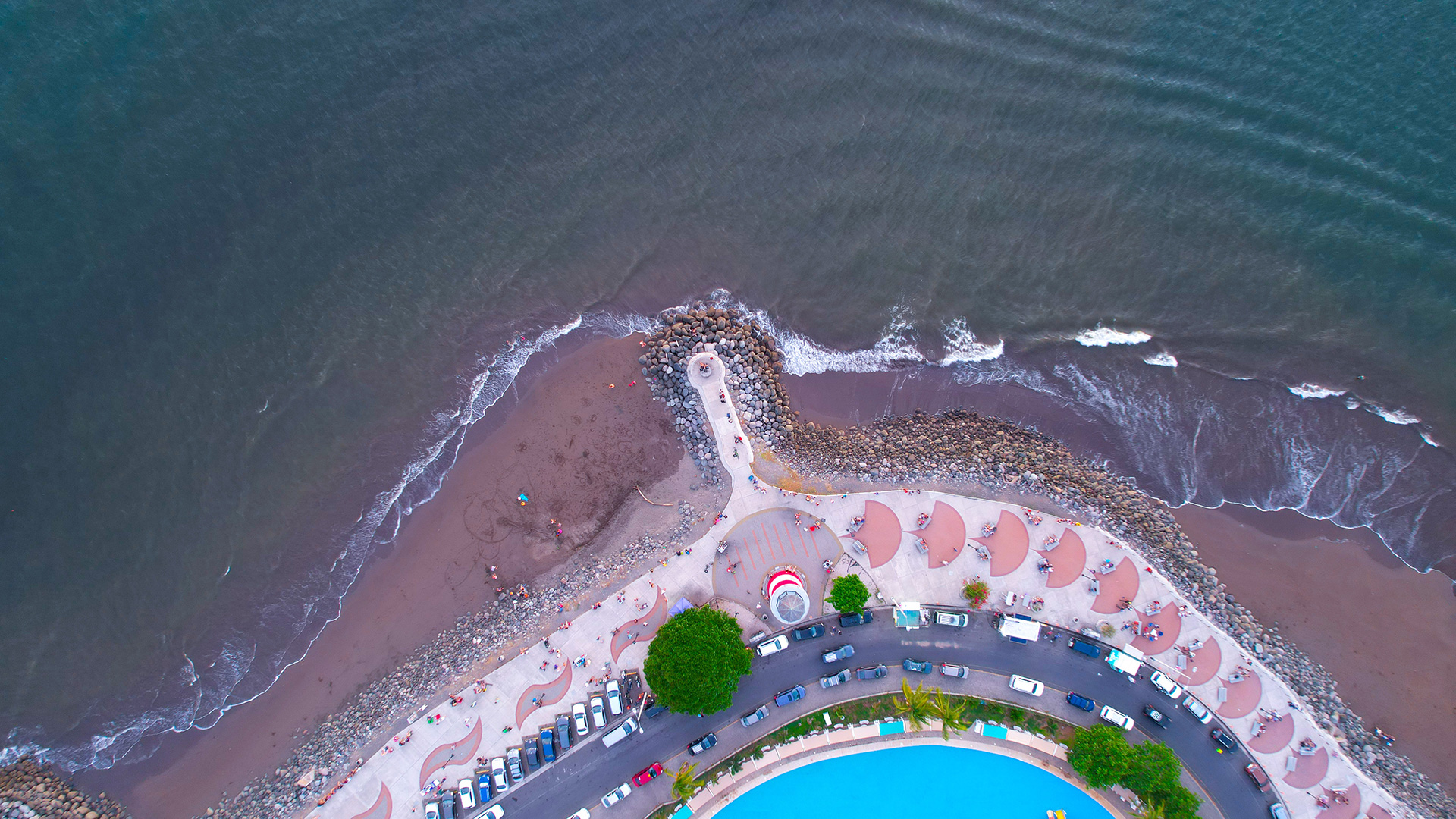
Tamarindo Beach is the most accessible beach of Guanacaste. It has its own airstrip that receives several flights a day from private charter companies as well as from Sansa and Nature Air. Also, there is a very reliable bus service to and from San José daily as well as from surrounding communities that come on a paved highway (4-5 hrs. from San Jose to Tamarindo) and you can also drive all the way there if you prefer to rent a car and sight see. There is also an international airport in Liberia, Guanacaste. This airport is just 50 minutes away from Tamarindo.
Tamarindo Beach is part of a bay formed by a cape: Cabo Velas. Playa Grande is to the north of Tamarindo Beach inside the same bay. These two beaches are separated by a natural estuary named Estero Tamarindo. To the South of Tamarindo Bay, there is another beautiful estuary and beach: Playa Langosta.
Both Playa Grande and Playa Langosta are protected nesting areas for the giant leatherback turtle, and are part of the Costa Rican national park system. These two beaches are considered the major nesting areas for these turtles worldwide. They get there from October to March and lay their eggs on the sand. Tourist can find guided tours in Tamarindo to go and see this miracle happen. There is also the jungle boat ride that takes tourists deep into the mysterious mangrove forest where you can encounter a breathtaking diversity of birds, mammals, and reptiles.
You can find all sorts of hotels in Tamarindo. From first class hotels to cabins that can provide decent comfortable lodging at a very reasonable rate. Tamarindo has several condominiums, private beach houses and B&B's. There are accommodations for every budget.
Tamarindo boasts an amazing selection of fine international and typical Costa Rican restaurants. There is a French bakery, as well as restaurants that serve health-conscious and vegetarian diners. It will be almost impossible to get bored of the food because of the wide variety of dishes made with a supply of fresh local seafood, fruits and vegetables.
Tamarindo also has several grocery stores, an Auto Mercado at the new Garden Plaza Mall. There is even a Country Day School nearby, just 15 minutes from Tamarindo.

Santa Ana

Page copy protected against web site content infringement by Copyscape

It seems that many of the people that move to Costa Rica want to live in Escazu. The reason could be because Escazu is located in a very convenient position. In Escazu you have it all!! Night life, shopping, education, entertainment, medical care and convenience are part of this city. Located just 5 minutes from San Jose, with tenths of commercial centers and malls, a first class private hospital (Cima San Jose) and the best International-scheduled Schools in Costa Rica (like Country Day School), Escazu is the best place to live.
There are two main ways to get to Escazu: by the highway and by the old road. This is quite convenient.
But there is something happening? People are now looking to settle down in Santa Ana instead of Escazu. What makes Santa Ana attractive to investors?
Well, it is true that Escazu has it all, but Santa Ana is just a step away and it has its own attractive. People living at the Sun Valley (as it is called) can enjoy all the conveniences of Escazu and be in a very nice, country side location with a warmer climate. You can find local artists that create beautiful pottery and very good five fork restaurants like Bacchus and El Estribo.
One aspect that makes Santa Ana very attractive is the fact that there are no condominium towers there. The landscape is the main attraction. During the summer months of February, March and April the landscape is covered with the beautifully bloomed Poro and Roble de Sabana trees. On February the view turns orange as the Poro trees boast their blossoms and from then on Santa Ana turns light pink when the Roble de Sabana trees shower the land with their wonderful flowers.
The Sun Valley is called so because, from the flatlands, people can see the beautiful mountains, and people from the mountains will enjoy the views of the valley. Either way it is a magnificent view to enjoy year round.
Large office corporations, like Forum, saw in Santa Ana the best option to grow. Santa Ana is creating its own comfort: New commercial and shopping centers, renowned schools (like School of the World) are turning to find the potential of this city. Pretty soon, we will be seeing a very different Santa Ana: far enough to keep its country side essence, but close enough to enjoy all major advantages of Escazu and San Jose, this city will be in midway on the new highway to Caldera, thus, getting to the beach will take no time at all.

New Highway to Caldera

Page copy protected against web site content infringement by Copyscape

30 years after it was planned, the new highway to caldera has been started. This highway was designed to prevent the traffic jams caused by the growth in population as well because of commercial activities. Definitely, people 30 years back had vision and could see Costa Rica was not going to stay as a country formed by little towns, but as a group of well developed cities. So, they designed this new highway to make it easier and faster to get to Caldera not only for the commerce but also for people to get to the Central Pacific.
Because of many reasons (economic and legislative), this highway was not started until it was a necessity that could wait no more. With hundreds of trucks driving every day to the port of Caldera plus thousands of national and international tourists visiting the Central Pacific and Guanacaste, the old road to Puntarenas, Jaco, Manuel Antonio and also Guanacaste the highway was pretty crowded and collapsed very often.
This project will vary slightly from the original one. The route will be just the same, but the capacity will be different. The original plan was to make this highway with just one-lane each way. Nowadays, the need of a wider, faster, more efficient highway calls for a two-lane, even three-lane road each way. For example, the part of the highway that goes up to Santa Ana will have the most lanes.
The fear now is that the old bridges will cause traffic jams because they are too narrow to hold more than two lanes. The plan is to improve as many bridges as possible to avoid this problem. Making most of them of more than one lane each way will be the best solution.
When this highway is completely finished (beginning of 2010), getting to Puntarenas from San Jose will take a little more than an hour. This will save not only time but also fuel. Some areas will be positively affected as Ciudad Colon, Brasil de Mora, Atenas and San Rafael de Alajuela, Orotina, San Mateo, Jaco and Manuel Antonio.
There will be from 4 to 6 toll booths along the 77 Km of this highway. If a driver finishes a one way trip to Caldera the cost will be a little bit less than $3.50. The toll booths of Escazu, Ciudad Colon, Atenas and Pozon are already established. They will be up and functioning as soon as the different sections of the highway are finished. The Escazu toll booth is going to cost about $0.50. There will be a device available called “transponder” that can be adhered to the windshield of the car and it will have a chip that will hold in its memory the credit or debit card number of the driver. In this way, the amount to be paid at the booth will be debited automatically. It could be paid with cash also. If a car passes by the booth without a “transponder”, nor paying with cash, a camera will record the license plate and the driver will get a ticket automatically.

NEW AND HOT!

Page copy protected against web site content infringement by Copyscape

Nowadays the HOT areas for real estate are Escazu and Santa Ana. This is because these two cities are very close to San Jose and they have all the commodities and amenities that buyers are looking for.
With the construction of the new Highway to Caldera, questions are starting to arise on whether this two places are going to continue being the top choice for buyers or if there will be new places that will become more attractive for investors. The new highway will make more accessible to some places that were considered hard to visit. Among those places we find Brasil de Mora and Ciudad Colon, also San Rafael de Alajuela is being considered as a possible blooming place.
Brasil de Mora and Ciudad Colon have a very warm and nice climate that is very appealing to buyers. Even with the actual highway, these towns were considered too far away to live there and to work in San Jose. Going to San Jose and do some errands is going to be just minutes away with the new highway and, as a plus, people will be able to get to the beach in a snap.
The same seems to be the matter with San Rafael de Alajuela. It is a nice, country like place with a warm mild weather. Besides, the international airport is so close and the beach will be easily accessible from here.
Now properties in these areas are well priced and the potential is amazing. This is why now it is a great moment to start looking for properties in these areas. It is predicted that prices will go up in these areas drastically when the highway is finished. So, why not taking a look at these towns and decide whether one of them is right for you to live or invest there?